Decrease Lines
Let’s get decreasing! This post looks at how different types of knit decreases look when they are stacked up, row after row, forming what we call ‘decrease lines’.
A decrease, in knitting, is any method that decreases the stitch count! Decreases are used to shape the fabric; at sleeves, at shoulders, at the top of hats, etc. Decreases are also used within lace and other stitch patterns, to manipulate the shape of the fabric itself.
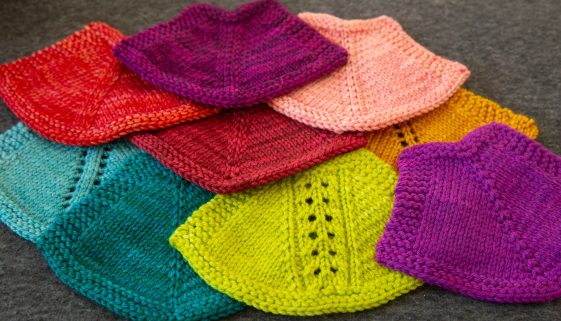
Let’s get decreasing! This post looks at how different types of knit decreases look when they are stacked up, row after row, forming what we call ‘decrease lines’.

Instructions on how to purl 2 stitches together.
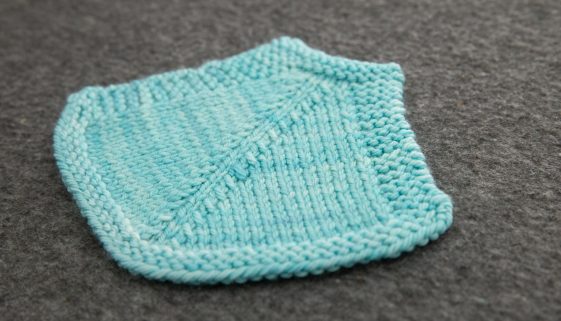
This tutorial explains an increase method that involves working multiple stitches in a single stitch.

This tutorial explains an increase method that involves working multiple stitches in a single stitch.
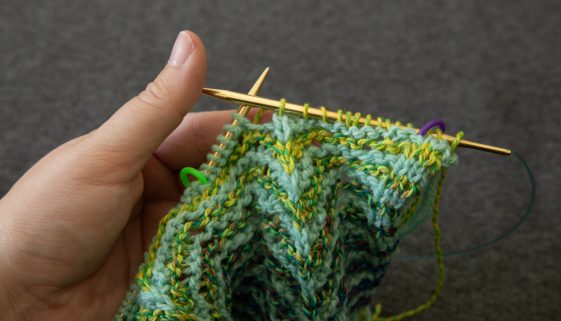
The central quadruple decrease, slip 3 stitches, knit 2 stitches together, pass 3 slipped stitches over, eliminates 4 stitches in a symmetrical way (thus ‘central’ and ‘quadruple’).

A central double decrease eliminates 2 stitches in a symmetrical way (thus ‘central’ and ‘double’). It results in a strong vertical decrease line that doesn’t slant to the left or the right, the way that the decreases k2tog, ssk, or sl1-k2tog-psso do.